To make a toy more universal and less gender specific, there are several aspects that must be changed about the advertising approach. In the case of the commercial for the Rose Petal Cottage, the components that should be addressed for the advertising include: the actors, the colors, the scene, and the music.
Girls are the only ones shown for this commercial, therefore it limits the targeting audience. It also makes it seem like this toy is only exclusive for girls and guys would be made fun of if they wanted to play with this cottage. The activities that are portrayed by the girls such as the baking and other "homemaker-type" actions also exclude boys. The prominently pink color and girly scenes also make it girl specific. The music also playing in the background promote the feminine feel of the commercial.
In order to make this product more gender friendly towards a boy audience, the commercial could have included a group of kids (including boys) playing with the cottage instead of having just little girls running around it. More dominant colors such as blue, green, or black could also be utilized in the commercial to reduce the feminine feel. Besides playing house and doing the typical "homemaker" activities, hide and seek would have been a more efficient activity to illustrate the fun that can be associated with the toy cottage.
Wednesday, March 20, 2013

Wednesday, March 6, 2013
Stereotypes/Racism Prevalent in Movies and TV
Stereotypes of course still exist in this judging world of ours. Though traditional roles are being challenged, judging will always exist. An example of a stereotyping traditional role that has been challenged throughout the years is the role of women as a stay-at-home mother/wife and homemaker. Women now have been given more rights and freedom, and dare to act and behave just like their male counterparts.
Advertising is not necessarily solely responsible for stereotyping and racism, as people always will have judgements about others, but it does contribute. It feeds on the notions that are already present in people's minds.
An example of a movie where stereotyping occurs is "White Chicks" because there is an assumption that blondes are not smart.

An example of a tv show where racism occurs would be BET's "The Game" where "typical" characterizations of whites and blacks are prevalent.

Advertising is not necessarily solely responsible for stereotyping and racism, as people always will have judgements about others, but it does contribute. It feeds on the notions that are already present in people's minds.
An example of a movie where stereotyping occurs is "White Chicks" because there is an assumption that blondes are not smart.
An example of a tv show where racism occurs would be BET's "The Game" where "typical" characterizations of whites and blacks are prevalent.
Racist Stereotyping, Tactful Upperhand or Just Plain Wrong?
I believe that we as the masses have just learned to accept the stereotyping that advertising has utilized throughout the decades. Because we do not give the stereotyping much thought or analysis, we accept it as the norm. Only upon further examination and a second look do we realize that what is occurring may not be ethical, but even a wrongful discrimination that we willingly accept in our daily lives.
I personally feel a little strange when it is put into the terms of "racially stereotyping", but as an advertising major, it will be what my job depends on. When put into black and white terms as such, it elicits unfavorable feelings but advertising has used racial stereotyping for many decades now. I think it is okay to racially stereotype for advertising purposes as long as those racial characterizations are not abused or made fun of. Such an example would be targeting good food/good cooking with Italians, as that is not an offensive race characterization in terms of advertising.

Racism as whole without the intent of reaching out to a particular group is definitely not a thing of the past. Though the segregated restaurants, separated seatings, and separate fountains have long since disappeared, the feelings that fueled such action still persist. Advertising is okay and accepted without much thought because it aims to reach a wider audience without malicious intent but rather hopes of broadening a product's market, whereas racism alone targets hate towards a group of people because of their appearance or beliefs/race characterizations.
I believe that advertisers do have an ethical responsibility to make sure that the ads that they run and the people they attempt to target never feel awkward or uneasy in the way their particular race is portrayed. Sometimes people may feel racially targeted, but as I think it is okay as long as there are no negative aspects.
For example, the 2013 Superbowl Volkswagen Commercial conveys the message that Jamaicans are always happy.
Monday, February 18, 2013
Reading the Signs - Semiotics
Semiotics: the study of signs and sign processes (semiosis), indication, designation, likeness, analogy, metaphor, symbolism, signification, and communication - definition courtesy of Wikipedia.
Though Semiotics can be defined, I feel like it is an extremely broad concept to understand and to fully cover. What it means to me, is what brand I instantly think of when I hear of a particular product, or what brand I associate with specific images or places. Semiotics to me means relativity to a product, synonymy with a brand or lifestyle.
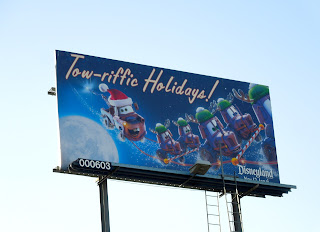
One example of such symbolism is Disneyland representing childhood and happiness. Invent something that children adore and their parents will happily pay you a fortune. The entire Disney brand is synonymous with children, innocence, and bliss.
This video commercial is an example of Smirnoff being the alcohol of choice in representing the party lifestyle. Smirnoff indicates a good time, women, and being the life of the party.
Though Semiotics can be defined, I feel like it is an extremely broad concept to understand and to fully cover. What it means to me, is what brand I instantly think of when I hear of a particular product, or what brand I associate with specific images or places. Semiotics to me means relativity to a product, synonymy with a brand or lifestyle.
One example of such symbolism is Disneyland representing childhood and happiness. Invent something that children adore and their parents will happily pay you a fortune. The entire Disney brand is synonymous with children, innocence, and bliss.
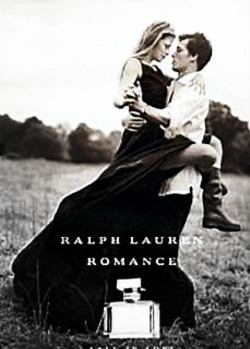
Another example of symbolism is perfume with romance. Apparently if you smell like Ralph Lauren, you will have a handsome man frolicking with you in a field. This relation with smelling good leading to a romantic relationship is an example of semiotics in the works, convincing the masses that smelling good = landing a stud.
This video commercial is an example of Smirnoff being the alcohol of choice in representing the party lifestyle. Smirnoff indicates a good time, women, and being the life of the party.
Saturday, February 9, 2013
Product Distinction or Marketing Scheme?
"Women dress for other women, and undress for men."
Honestly, I think men can't even differentiate what's different on a woman half of the time (i.e. hair, nail color, perfume, outfit), they just know the golden rules - that women are complicated/moody creatures and to never ask how much they weigh.

So why do women care so much about clothes and looking good? Why are we so willing to shell out an extra $50 of our hard-earned cash on something name brand vs. a generic brand?
Well men's judgements aside, I think it's because we use fashion and appearance in attempts to make a statement of what kind of person we may be and our personality without having to state a single word. This is the gold that marketing is driven by, the desire to have the product speak on behalf of its owner in a favorable light. My "best-friends" in terms of name brands are all "best-friends" I can't afford, but merely dream of until I am no longer a broke college student - or if I don't eat (and blow it all on clothes, and SHOES).
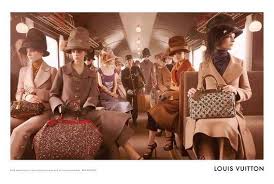
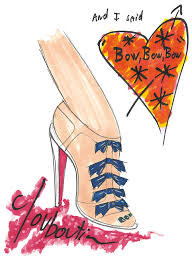
When I think of elegance and class, I think of Chanel, Louis Vuitton, Louboutins - and all the other brands that cost almost as much as a semester's tuition. Though I do acknowledge the fact that I fall prey to the glitz and glamour that these brands perceive to bring, I question if it's really the lfiestyle I'm attaining to seek or rather the quality it promises. Deep down, I know I lust because it's the lifestyle that's so alluring, if I cared more about quality, brand names wouldn't be a concern at all.

Though my main example of brands serving more as a marketing tactic to attract attention rather than being a product distinction is focused on women (and ridicule of my illogical, lustful ways) and our crazy beauty rituals (beauty=pain I was taught at a young age), our time-consuming inability to decide the outfit for the day, and the desire to indulge on all things fabulous and trendy - the lesson of brand name preference can be applied to the masses and in all domain of products.
Honestly, I think men can't even differentiate what's different on a woman half of the time (i.e. hair, nail color, perfume, outfit), they just know the golden rules - that women are complicated/moody creatures and to never ask how much they weigh.
So why do women care so much about clothes and looking good? Why are we so willing to shell out an extra $50 of our hard-earned cash on something name brand vs. a generic brand?
Well men's judgements aside, I think it's because we use fashion and appearance in attempts to make a statement of what kind of person we may be and our personality without having to state a single word. This is the gold that marketing is driven by, the desire to have the product speak on behalf of its owner in a favorable light. My "best-friends" in terms of name brands are all "best-friends" I can't afford, but merely dream of until I am no longer a broke college student - or if I don't eat (and blow it all on clothes, and SHOES).
When I think of elegance and class, I think of Chanel, Louis Vuitton, Louboutins - and all the other brands that cost almost as much as a semester's tuition. Though I do acknowledge the fact that I fall prey to the glitz and glamour that these brands perceive to bring, I question if it's really the lfiestyle I'm attaining to seek or rather the quality it promises. Deep down, I know I lust because it's the lifestyle that's so alluring, if I cared more about quality, brand names wouldn't be a concern at all.
Though my main example of brands serving more as a marketing tactic to attract attention rather than being a product distinction is focused on women (and ridicule of my illogical, lustful ways) and our crazy beauty rituals (beauty=pain I was taught at a young age), our time-consuming inability to decide the outfit for the day, and the desire to indulge on all things fabulous and trendy - the lesson of brand name preference can be applied to the masses and in all domain of products.
Dietmar Dahmen
"It does not matter what car a man may drive, but rather what drives the man."
The task of sitting through a speaker is one I've grown quite accustomed to. Sit and listen and feel inspired for a moment, then just feel the life drain out of me once again in a day or two... but this speaker was different. Dahmen's ability to completely captivate the attention of an entire room had me in awe. His enthusiasm towards advertising definitely reaffirmed the fact that this industry was something he believed in, something he utterly loved and was good at. The passion that radiates off him is what I hope to one day find in my own career, so that I utterly love what I do - so that I will never feel like I am working a day in my life. I hope to find what drives me to succeed. The subjects he had brought about about the future of advertising had me wondering what would come next in this ever changing field.

The two points Dahmen touched on that I found rather interesting were the unwillingness of people to change and adapt, and the brand serving as selling more of a lifestyle than a product.
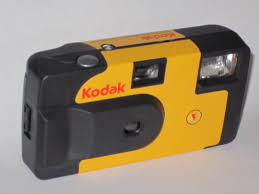
For example, when he mentioned that no one in the ice industry had gone into the refrigeration industry, which was rather shocking because ice and freezer go hand in hand today. It struck me as the sense of stubbornness which caused the demise and end to many companies. Growing up, I also remember Kodak and uploading my memories/photos onto Photobucket and ordering prints of pictures and so forth, but those days no longer exist in a fast-paced lifestyle and the ever-so convenient iPhone camera roll. Things that fail to reinvent and adapt are the ones that people will most likely tend to forget.

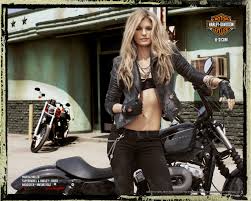
The second point I definitely had to agree with was the brand power and capability, like with the example of a Harley-Davidson. We purchase for the freedom, the bold and daring statement about the individual on the motorcyle-more than we do for performance. Often times, it's often both we confuse. Certain brands become synonymous with a perceived state of quality and a certain desire of lifestyle.
Prior to his speech, I was rather hesitant towards my decision to pursue Advertising as a career, but now I'm certain I chose correctly. The excitement that radiates off him is what I hope to one day find in my own career, the thrill and prospect of excitement is what I crave.
The task of sitting through a speaker is one I've grown quite accustomed to. Sit and listen and feel inspired for a moment, then just feel the life drain out of me once again in a day or two... but this speaker was different. Dahmen's ability to completely captivate the attention of an entire room had me in awe. His enthusiasm towards advertising definitely reaffirmed the fact that this industry was something he believed in, something he utterly loved and was good at. The passion that radiates off him is what I hope to one day find in my own career, so that I utterly love what I do - so that I will never feel like I am working a day in my life. I hope to find what drives me to succeed. The subjects he had brought about about the future of advertising had me wondering what would come next in this ever changing field.
The two points Dahmen touched on that I found rather interesting were the unwillingness of people to change and adapt, and the brand serving as selling more of a lifestyle than a product.
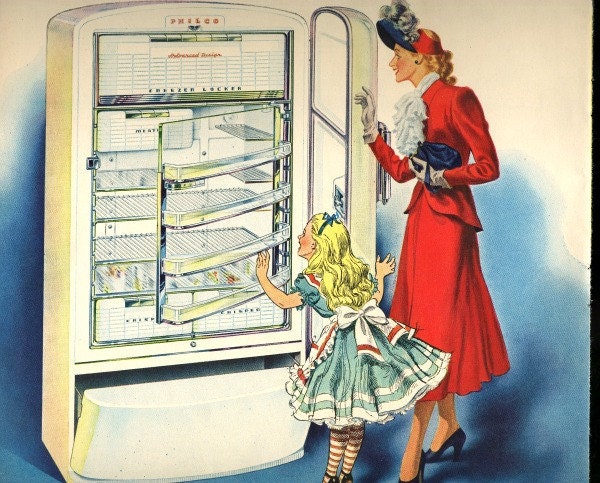
For example, when he mentioned that no one in the ice industry had gone into the refrigeration industry, which was rather shocking because ice and freezer go hand in hand today. It struck me as the sense of stubbornness which caused the demise and end to many companies. Growing up, I also remember Kodak and uploading my memories/photos onto Photobucket and ordering prints of pictures and so forth, but those days no longer exist in a fast-paced lifestyle and the ever-so convenient iPhone camera roll. Things that fail to reinvent and adapt are the ones that people will most likely tend to forget.
The second point I definitely had to agree with was the brand power and capability, like with the example of a Harley-Davidson. We purchase for the freedom, the bold and daring statement about the individual on the motorcyle-more than we do for performance. Often times, it's often both we confuse. Certain brands become synonymous with a perceived state of quality and a certain desire of lifestyle.
Prior to his speech, I was rather hesitant towards my decision to pursue Advertising as a career, but now I'm certain I chose correctly. The excitement that radiates off him is what I hope to one day find in my own career, the thrill and prospect of excitement is what I crave.
Monday, February 4, 2013
What captures me about Advertising
I think as human beings, we are naturally awestruck and inclined
towards beautiful things. That is exactly what excites me so much about
advertising! It is still fascinating to me; advertisements are able to
capture the essence of beauty, timeless elegance, and appeal just
through the use of images and words.
To play on the human curiosity and desires, the images portray a certain lifestyle that the consumer wishes to have. This fantasy world is what drives sales, is what pushes consumers to keep wanting more.

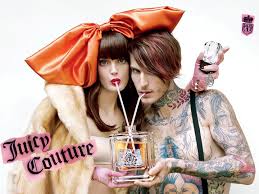


Without advertising and branding, products would just be products. There would be no need to pay 3000+ for a Chanel hand bag when you could use any old satchel. It's the portrayed lifestyles that intrigue me, the indulgence.
Though some people may argue that advertising is propaganda for negative things such as tobacco or alcohol, I believe that this capability for such products to be transformed into a flattering and intriguing perspective is rather impressive. It's all how it is presented and perceived.
To play on the human curiosity and desires, the images portray a certain lifestyle that the consumer wishes to have. This fantasy world is what drives sales, is what pushes consumers to keep wanting more.
Without advertising and branding, products would just be products. There would be no need to pay 3000+ for a Chanel hand bag when you could use any old satchel. It's the portrayed lifestyles that intrigue me, the indulgence.
Though some people may argue that advertising is propaganda for negative things such as tobacco or alcohol, I believe that this capability for such products to be transformed into a flattering and intriguing perspective is rather impressive. It's all how it is presented and perceived.
Subscribe to:
Posts (Atom)